
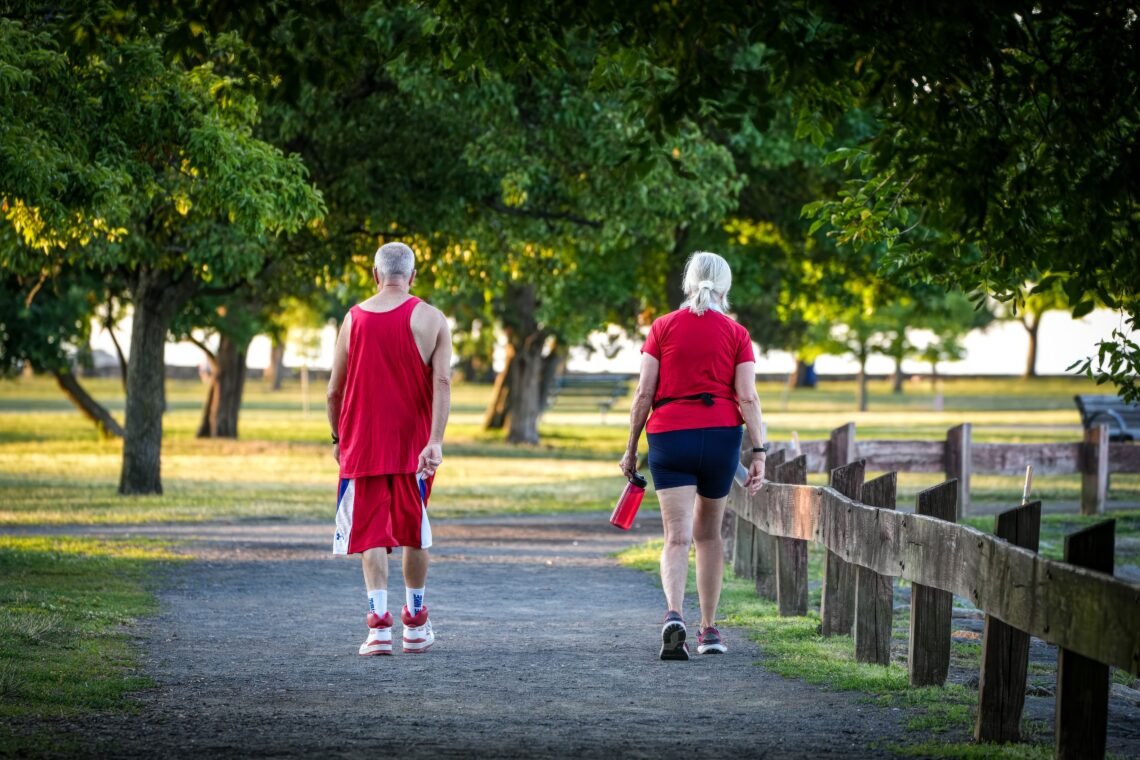
Walking is the most accessible exercise there is. You need no gym membership, no special kit beyond comfortable shoes, and no experience. Yet a daily half-hour walk can contribute meaningfully to your health.
This article explains what the evidence says about walking 30 minutes a day, what benefits you can reasonably expect, and how to build the habit without hurting yourself or getting bored.
Contents
- Does 30 minutes of walking count?
- Health benefits of daily walking
- How to make your walk effective
- A simple four-week plan
- Safety and who should check first
- FAQs
Does 30 Minutes of Walking Count?
Yes. Both US and UK guidance recommends that adults do at least 150 minutes of moderate-intensity activity a week, along with muscle-strengthening activity on two days. The CDC gives the example of 30 minutes a day, five days a week, and notes that you can break it into smaller chunks. The NHS guidelines for adults aged 19 to 64 follow the same 150-minute benchmark.
“Moderate intensity” means your heart rate rises and you breathe faster, but you can still hold a conversation. Brisk walking fits perfectly.
The guidelines also stress that some activity is better than none. If 30 minutes sounds daunting, start with 10 and build up.
Health Benefits of Daily Walking
Heart and circulation
Regular moderate activity is associated with lower blood pressure and a lower risk of heart disease and stroke. Walking is a gentle way to get the heart working, and most people can do it for years.
Blood sugar control
Muscles use glucose for fuel when you move. A short walk after meals has been shown in small studies to blunt blood sugar rises. Regular activity also supports long-term insulin sensitivity, which is why it is part of advice for preventing type 2 diabetes. If you have diabetes, talk with your care team about timing and monitoring.
Mood and mental wellbeing
Physical activity is linked with lower levels of anxiety and depression symptoms and better mood. Walking outdoors adds daylight and a change of scenery, both of which can help. Walking with a friend adds social connection, which is another protective factor. Our article on reducing everyday stress naturally covers more ideas.
Weight management
Walking burns calories, but it is not a magic bullet. How many it burns depends on your body weight, pace and terrain. Most people find walking works best as part of a package that includes sensible eating, sleep and other activity. We cover the broader picture in our guide to healthy weight loss habits.
Bones and joints
Walking is a weight-bearing activity, which helps maintain bone density. It is also low impact, so it is typically easier on the joints than running. For some people with arthritis, gentle regular movement can actually reduce stiffness, though you should follow your clinician’s advice.
Sleep
Daytime activity, particularly outdoors, can help you fall asleep more easily at night. Avoid very vigorous exercise close to bedtime if that disrupts you, but a gentle evening stroll often helps people wind down. See how to improve sleep quality naturally.
Longevity
Large reviews of step-count studies suggest that people who take more daily steps tend to have a lower risk of dying early, with benefits levelling off at higher counts. These are observational studies, so they cannot prove cause and effect, but the pattern is consistent. The much-quoted 10,000-step target is not a medical threshold. It is widely traced back to a 1960s Japanese pedometer marketing campaign. Many people gain meaningful benefits at lower step counts.
How Many Steps Is 30 Minutes?
It varies with your stride and pace. As a rough guide, 30 minutes of brisk walking is often around 3,000 to 4,000 steps, though your own figure may differ. A phone or fitness tracker can give you a personal baseline. Rather than chasing a number, focus on the minutes and the effort.
How to Make Your Walk Effective
Use the talk test
For moderate intensity, you should be able to talk but not sing. If you can sing easily, pick up the pace. If you cannot speak a short sentence, slow down.
Split it up if you need to
The CDC notes you can spread your activity across the week and break it into smaller sessions. Three 10-minute walks (before work, at lunch and after dinner) deliver the same total as one 30-minute walk. This is ideal if you have a busy schedule.
Mind your posture
- Keep your head up and look ahead, not down at your phone.
- Relax your shoulders and let your arms swing naturally.
- Land gently on your heel and roll through to your toes.
- Take comfortable strides rather than overstretching.
Choose the right shoes
Supportive, flexible shoes with good cushioning reduce the risk of blisters and sore feet. Replace them when the soles are worn down.
Add variety
Hills, stairs, interval pacing (for example, two minutes fast, two minutes easy) and different routes make walking more interesting and raise the challenge. Add them gradually.
Stack it with something you already do
Habit stacking helps consistency. Walk straight after breakfast, take calls on foot, or walk part of your commute. Our guide on building a healthy daily routine goes into this in more detail.
A Simple Four-Week Plan
If you are new to regular exercise, build up gradually.
| Week | Daily walk | Notes |
|---|---|---|
| 1 | 10 to 15 minutes | Easy pace. Focus on showing up. |
| 2 | 15 to 20 minutes | Add a few brisk intervals of one to two minutes. |
| 3 | 20 to 25 minutes | Aim for a steady brisk pace most of the way. |
| 4 | 30 minutes | Five days a week, with two easier days if needed. |
Rest when your body asks for it. A slightly sore calf is normal. Sharp or persistent pain is not.
Remember that the guidelines also recommend muscle-strengthening activity on at least two days a week. Walking alone does not cover that. Simple bodyweight exercises, resistance bands or yoga all count. Our easy morning exercises for beginners are a good starting point.
Safety and Who Should Check First
Walking is safe for most people, but speak to a doctor before significantly increasing your activity if you:
- Have a heart condition, high blood pressure that is poorly controlled, or chest pain on exertion
- Have diabetes, balance problems or osteoporosis
- Are pregnant or recently gave birth
- Have joint, back or foot conditions
- Have been inactive for a long time and have multiple health conditions
Stop and seek medical help if you feel chest pain, severe breathlessness, dizziness or faintness.
For weather and comfort, wear layers in cold weather, use sun protection and carry water in heat, and choose well-lit routes if walking early or late. In hot climates, walk at cooler times of day.
FAQs
Is walking 30 minutes a day enough exercise?
It meets the aerobic target if you do it at least five days a week at a moderate pace. For fuller fitness, add muscle-strengthening activity on two days a week, as both CDC and NHS guidelines recommend.
Can I lose weight by walking 30 minutes a day?
It can contribute, especially alongside balanced eating. Weight change depends on your overall calorie balance, so walking alone may not lead to dramatic results. Many people also notice improved energy and mood, which makes other healthy habits easier.
Is it better to walk in the morning or evening?
The best time is the one you will stick to. Morning walks provide daylight exposure, while after-meal walks may help with blood sugar. Choose what fits your life.
Should I walk 10,000 steps a day?
It is a handy goal for some, but not a requirement. Research suggests benefits begin well below 10,000 steps. Start where you are and gradually increase.
Does a treadmill count?
Yes. The key is intensity and duration. Setting a slight incline can raise the effort if you want more of a challenge.
Conclusion
Walking 30 minutes a day is a small commitment with wide-ranging potential benefits for your heart, mood, sleep and energy. Begin with whatever feels manageable, use the talk test to gauge effort, and build up slowly. The best walking routine is the one you enjoy enough to repeat tomorrow.
This article is for general information only and is not a substitute for personalised medical advice. Consult a healthcare professional before starting a new exercise programme, particularly if you have a medical condition.