If your mornings usually involve a rushed coffee and a mid-morning energy crash, your breakfast may be part of the problem. The best healthy breakfast ideas share a simple formula: some protein, plenty of fibre, and slow-release carbohydrates that keep you going until lunch.
This guide gives you ten practical options, from five-minute fixes to make-ahead meals, plus the reasoning behind them so you can build your own.
Contents
- Why breakfast can affect your energy
- What makes a breakfast energising
- 10 healthy breakfast ideas
- Tips for busy mornings
- Who should take extra care
- FAQs
Why Breakfast Can Affect Your Energy
Research on breakfast is more nuanced than the old slogan about “the most important meal of the day”. Studies are mixed on whether eating breakfast helps with weight control, and plenty of healthy people do well on a later first meal. What does seem to matter is the quality of whatever you eat when you do eat.
A breakfast built mainly on refined carbohydrates and sugar, such as a pastry or a sugary cereal, tends to digest quickly. For many people that means hunger returns within a couple of hours. A breakfast with protein and fibre digests more slowly and is usually more satisfying.
If you are not hungry first thing, you do not have to force food down. Take the ideas below and use them whenever your first meal happens.
What Makes a Breakfast Energising
Think of your plate in three parts.
Protein. Eggs, yoghurt (yogurt in the US), cottage cheese, beans, tofu, nuts and seeds all help you feel full for longer.
Fibre-rich carbohydrates. Oats, wholegrain bread, fruit and vegetables provide steady fuel. Adults in the UK are advised to aim for about 30 g of fibre a day, and the US Daily Value is 28 g, yet many people fall short. Breakfast is an easy place to close the gap.
Healthy fats. Nuts, seeds, avocado and nut butters add flavour and staying power.
Also keep an eye on added sugar. The NHS suggests adults limit free sugars to around 30 g a day, and a single flavoured yoghurt or a bowl of sweetened cereal can use up a big share of that. Reading the label takes seconds and often changes your choice.
10 Healthy Breakfast Ideas
1. Porridge (oatmeal) with fruit and nuts
Oats contain a type of fibre called beta-glucan, which is linked to improved cholesterol levels. Cook them with milk or a fortified plant drink, then top with sliced banana or berries and a spoonful of chopped nuts. Skip flavoured instant packets, which are often high in sugar. Cinnamon adds sweetness without sugar.
2. Overnight oats
This is the ultimate make-ahead breakfast. Mix about 40 g (a third of a cup) of oats with milk or yoghurt, a teaspoon of chia seeds and a handful of berries in a jar. Leave it in the fridge overnight and eat it cold in the morning. Make three jars on Sunday and your next three mornings are sorted.
3. Greek yoghurt bowl
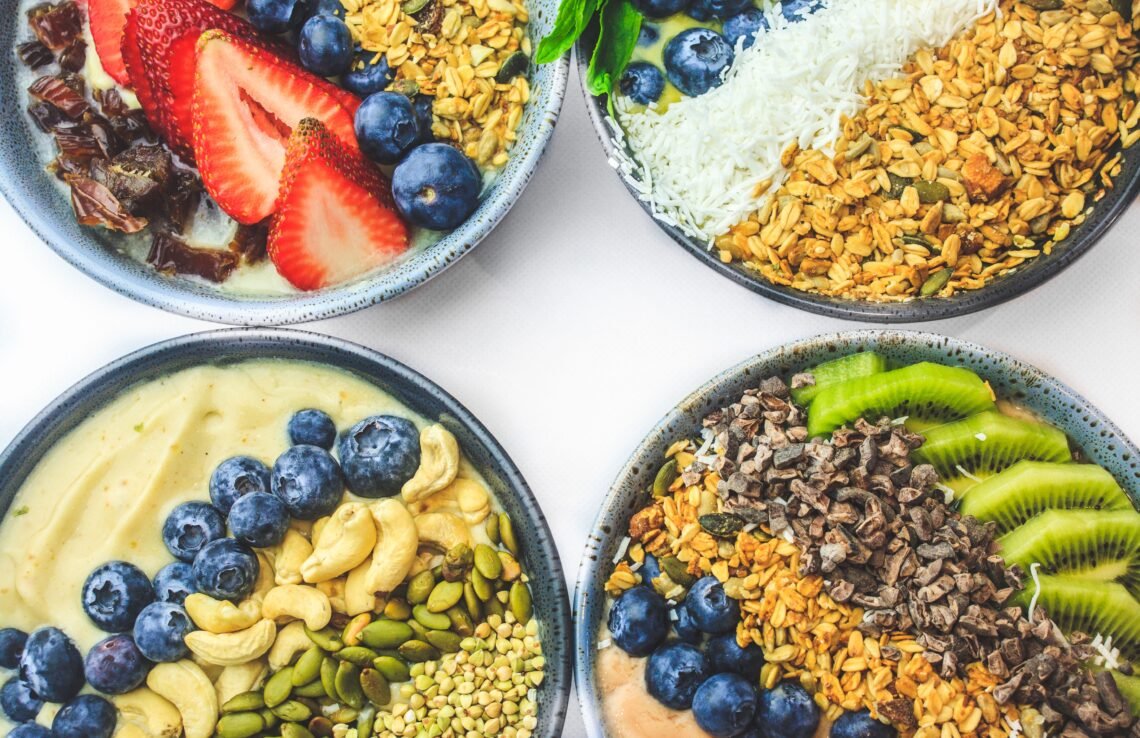
Strained Greek-style yoghurt is higher in protein than regular yoghurt. Choose plain, unsweetened versions and add fresh fruit, a sprinkle of seeds and a little honey if needed. You control the sugar, which is the main advantage over pre-flavoured pots.
4. Veggie scrambled eggs on wholegrain toast
Eggs are a convenient source of protein, and scrambling them with spinach, tomatoes or peppers adds vegetables before 9am. Serve with a slice of wholegrain or seeded bread. This takes about five minutes and works equally well as a weekend brunch.
5. Smashed avocado on toast
Avocado provides mostly unsaturated fat and some fibre. Mash half an avocado onto wholegrain toast with lemon juice, black pepper and chilli flakes. To make it more filling, add a poached egg, or a few white beans for a plant-based protein boost.
6. Nut butter and banana toast
Simple and satisfying. Spread a thin layer of peanut or almond butter on wholegrain toast and add banana slices. Choose a nut butter that lists just nuts (and perhaps salt) on the label. Nut butters are calorie-dense, so a tablespoon or so is plenty.
7. Green smoothie with protein
Blend a handful of spinach, a banana, frozen berries, plain yoghurt or milk, and a tablespoon of oats or ground flaxseed. Smoothies are handy when you are short of time. Note that the NHS counts a smoothie as a maximum of one of your five a day, however much fruit it contains, and recommends keeping juice and smoothies to around 150 ml a day. Add protein and fibre so it works as a meal rather than a sweet drink.
8. Black bean breakfast wrap
Warm a wholegrain tortilla, then fill it with black beans, scrambled egg or tofu, salsa and a little grated cheese. Beans offer both protein and fibre, and the wrap travels well if you eat at your desk. Batch-make several and freeze them individually.
9. Cottage cheese with fruit and seeds
Cottage cheese is high in protein and easy to dress up. Try it with pineapple or peaches and pumpkin seeds, or go savoury with cherry tomatoes, cucumber and black pepper. If you are watching your salt intake, compare brands, as sodium levels vary.
10. Baked oat cups or egg muffins
Bake a batch on the weekend and reheat during the week. Baked oat cups combine oats, mashed banana, egg and berries. Egg muffins combine whisked eggs with chopped vegetables and a little cheese. Both are portable, portion-controlled and freezer-friendly.
Tips for Busy Mornings
- Prepare the night before. Lay out bowls, portion oats into jars, or pre-chop vegetables.
- Keep staples at home. Eggs, oats, frozen fruit, plain yoghurt, nut butter and wholegrain bread cover most of the ideas above.
- Drink water first. A glass of water after waking is a simple way to start hydrating. Our guide on how much water you should drink every day explains what is realistic.
- Cut back on liquid sugar. If your breakfast comes with a large juice or sweetened coffee drink, try halving it and see how your energy holds up.
- Plan the whole day. Breakfast works best as part of a pattern. Our 7-day healthy meal plan for beginners shows how to fit it in.
Who Should Take Extra Care
Some people need to be more deliberate about breakfast:
- People with diabetes, especially those taking insulin or certain tablets, should follow the meal timing and carbohydrate advice from their healthcare team.
- People with food allergies or intolerances should check labels carefully. Oats may need to be certified gluten-free for people with coeliac disease, and nuts, eggs, dairy and soy are common allergens.
- Pregnant women should follow local guidance on foods to avoid, such as certain soft cheeses and undercooked eggs, depending on country and egg quality marks.
- People with kidney disease may need to limit protein, potassium or phosphorus and should ask a dietitian for tailored advice.
FAQs
Is it bad to skip breakfast?
Not necessarily. Evidence on skipping breakfast is mixed, and many healthy adults do fine without it. What matters more is your overall diet quality across the day, how you feel, and any medical needs. If you skip breakfast and feel shaky or distracted, try a small, protein-rich option.
What is the healthiest breakfast for energy?
There is no single best breakfast, but meals that combine protein, fibre and healthy fats, such as eggs with wholegrain toast or oats with nuts and fruit, tend to keep people satisfied for longer than sugary options.
How much protein should I have at breakfast?
Needs vary. Many dietitians suggest spreading protein across meals rather than saving it all for dinner. A palatable target for many adults is roughly 15 to 25 g at breakfast, but your own needs depend on your size, age and activity. See our list of high-protein foods for ideas.
Are smoothies a healthy breakfast?
They can be, if they include protein (yoghurt, milk, nut butter) and fibre (oats, seeds, whole fruit and vegetables). Fruit-only smoothies can be high in sugar and less filling.
What can I eat for breakfast if I have no time?
Try overnight oats, a banana with a handful of nuts, a yoghurt pot with seeds, or a ready-made egg muffin from your freezer.
Conclusion
A healthy breakfast does not have to be elaborate. Pick a protein, add a fibre-rich carbohydrate and a little healthy fat, and your energy is likely to feel steadier through the morning. Start with one or two ideas from this list, see what you enjoy, and build from there.
This article is for general information only and is not a substitute for personalised medical or dietary advice. Speak to your doctor, pharmacist or registered dietitian if you have a medical condition, food allergy or special nutritional needs.