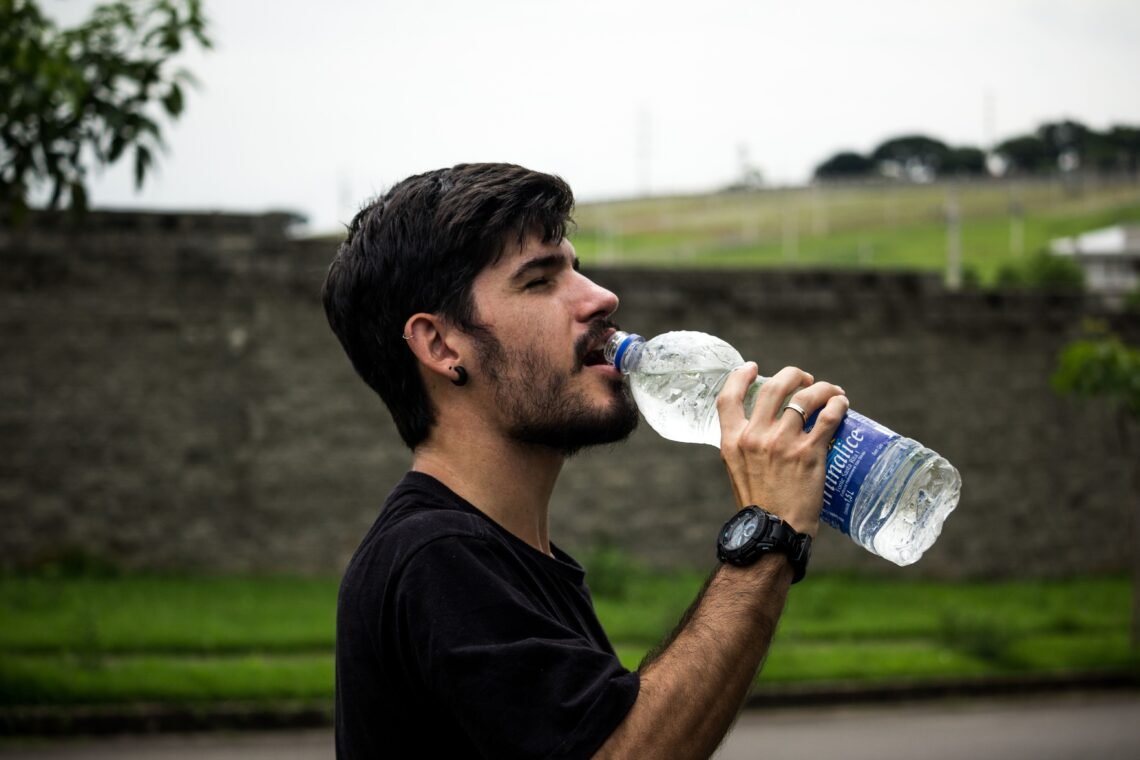
“Drink eight glasses a day” is advice most of us have heard since childhood. But where does it come from, and is it right for you? The truth is a little more flexible than the slogan suggests.
This guide explains what official guidance actually says about daily water intake, what changes your needs, how to tell whether you are drinking enough, and simple ways to make hydration easier.
Contents
- What the guidance says
- What counts towards your fluid intake
- Factors that change how much you need
- Signs of dehydration
- Can you drink too much water?
- Practical ways to drink more
- FAQs
What the Guidance Says
The first thing to know is that there is no single magic number. The CDC states that daily recommendations vary by age, sex, pregnancy status and breastfeeding status, and that there is no set recommendation for how much plain water everyone should drink.
What exists instead are recommendations for total water intake, meaning water from all drinks and food combined. The National Academies of Sciences, Engineering, and Medicine (formerly the Institute of Medicine) set adequate total water intakes for healthy adults, including during normal activity in temperate climates:
| Group | Total water from all drinks and food |
|---|---|
| Adult men | About 3.7 litres (125 US fl oz) per day |
| Adult women | About 2.7 litres (91 US fl oz) per day |
Food typically provides roughly 20 percent of this total. That leaves about 3 litres (around 13 cups) of drinks for men and about 2.2 litres (around 9 cups) for women, and that includes tea, coffee, milk and other beverages, not only plain water.
In the UK, the NHS advice is simpler: aim for around 6 to 8 glasses of fluid a day. A glass is usually taken to be about 200 ml, so this is roughly 1.2 to 1.6 litres. NHS guidance counts water, lower-fat milk and sugar-free drinks, including tea and coffee. The two sets of figures look different because the American number includes water from food and from all beverages, while the NHS figure refers to drinks.
These are general targets for healthy adults, not strict rules. Treat them as a starting point.
What Counts Towards Your Fluid Intake
Almost all drinks contribute to hydration, but some are healthier choices than others.
- Water is calorie-free and usually the best everyday option. The CDC suggests choosing water over sugary drinks.
- Milk provides fluid along with protein and calcium.
- Tea and coffee count too. Moderate caffeine intake, up to around 400 mg a day for most healthy adults according to the CDC, can fit into a healthy diet. That is roughly four small cups of brewed coffee, though strength varies widely. Pregnant women are usually advised to limit caffeine further, so follow local guidance.
- Fruit juice and smoothies count, but the NHS advises limiting them to a combined total of 150 ml a day because of their sugar content.
- Sugary drinks such as regular soda (fizzy drinks), energy drinks and sweetened coffees hydrate you, but add a lot of sugar and calories with little nutritional benefit.
- Water-rich foods such as cucumber, melon, oranges, soup, yoghurt and tomatoes all contribute.
Alcohol is not a good hydration source. It can increase urine output, so it should not be counted towards your fluid target.
Factors That Change How Much You Need
Your ideal intake shifts from day to day. Common influences include:
- Heat and humidity. You lose more fluid through sweat in warm weather or in hot rooms.
- Exercise. Longer or more intense activity increases sweat losses. Our guide on walking 30 minutes a day suggests carrying water on warm days.
- Body size. Larger people generally need more.
- Illness. Fever, vomiting and diarrhoea can cause rapid fluid loss and may require extra fluids or oral rehydration solutions. Seek medical advice if symptoms are severe or last long.
- Pregnancy and breastfeeding. Needs increase. The National Academies’ adequate total water intakes are about 3.0 litres a day in pregnancy and 3.8 litres while breastfeeding, though your midwife or doctor can advise you personally.
- Altitude. Higher altitudes can increase fluid losses through faster breathing and urination.
- Diet. A diet rich in fruit and vegetables supplies more water from food. Salty or high-protein meals may increase thirst.
- Medications and medical conditions. Some medicines, such as diuretics, change fluid balance.
Signs of Dehydration
Your body gives you clues. Mild dehydration can cause:
- Thirst and a dry mouth
- Darker, stronger-smelling urine
- Urinating less often than usual
- Headache
- Tiredness, dizziness or difficulty concentrating
- Dry lips and skin
A practical check is your urine colour. The NHS says pale, clear urine generally suggests you are well hydrated, while darker urine suggests you need more fluids. Certain foods, vitamins and medicines can change urine colour, so use it as a guide rather than a diagnosis.
Seek urgent medical help if someone shows signs of severe dehydration, such as confusion, a very fast heartbeat, fainting, extreme weakness, or no urine for many hours.
Babies, young children and older adults are at higher risk. Older adults may feel less thirsty even when they need fluids, so regular drinking habits are especially helpful.
Can You Drink Too Much Water?
Yes, though it is uncommon in everyday life. Drinking extremely large amounts in a short time, such as more than about 1.5 litres in an hour, can dilute sodium in the blood and cause a condition called hyponatraemia (low blood sodium). Symptoms include nausea, headache, confusion and, in serious cases, seizures. It has most often been reported in endurance athletes and in people who force down huge volumes.
You do not need to track every sip. Drink when you are thirsty, spread your intake across the day, and let urine colour guide you.
Important: If you have heart failure, kidney disease, liver disease or another condition that affects fluid balance, or if you take medicines that influence fluid or salt levels, your doctor may give you a specific fluid target. Follow that advice rather than general guidelines.
Practical Ways to Drink More Water
If you find it hard to drink enough, try these ideas:
- Start your day with a glass. Keep one by your bed or on the kitchen counter. It slots neatly into a healthy morning routine.
- Carry a bottle you like. Visible, refillable bottles remind you to sip.
- Link drinking to habits. Have a glass with each meal, after brushing your teeth, or whenever you check your email.
- Flavour it naturally. Add slices of lemon, cucumber, berries or mint, or try sparkling water.
- Eat your water. Add soup, salad, melon and other water-rich foods to your meals.
- Swap one sugary drink. Replacing a daily soda or sweet latte with water or unsweetened tea is a simple win. It also supports healthy weight loss habits.
- Use cues, not just targets. Check your urine colour when you use the bathroom.
- Drink more around activity. Sip before, during and after exercise, especially in heat.
For people who are active for a long time or in hot conditions, sports drinks may sometimes be useful, but the CDC notes that for most people, water is the better choice for rehydration.
FAQs
Is 8 glasses of water a day necessary?
Not strictly. The “8 glasses” idea is close to the NHS suggestion of 6 to 8 glasses of fluid, but needs vary. Remember that other drinks and food also contribute to your total.
Does coffee dehydrate you?
In moderate amounts, coffee generally contributes to your fluid intake rather than depleting it. Very high caffeine intakes can cause jitteriness, sleep problems and a faster heartbeat, so moderation matters. Our sleep guide explains why late-day caffeine can be a problem.
Is it better to drink water with meals or between meals?
Either is fine for most people. Choose whatever suits your digestion and routine.
Does drinking water help with weight loss?
Replacing sugary drinks with water can reduce calorie intake, which may help with weight management. Water alone is unlikely to cause weight loss by itself.
How much water should older adults drink?
Needs are similar to other adults, but thirst signals may weaken with age. Regular drinks through the day are helpful, unless a doctor has advised fluid limits.
Conclusion
There is no universal answer to how much water you should drink a day, but there are sensible guides: roughly 6 to 8 glasses of fluid under NHS advice, or total water intakes of about 2.7 to 3.7 litres from drinks and food combined based on US reference values. Listen to your thirst, check your urine colour, adjust for heat, activity and health, and make water your default drink. Small habits, repeated daily, make hydration easy.
This article is for general information only and is not a substitute for personalised medical advice. If you have a medical condition or take medicines that affect fluid balance, speak to your doctor before changing how much you drink.